

Half the Answer
What is Electronic Benefit Verification?
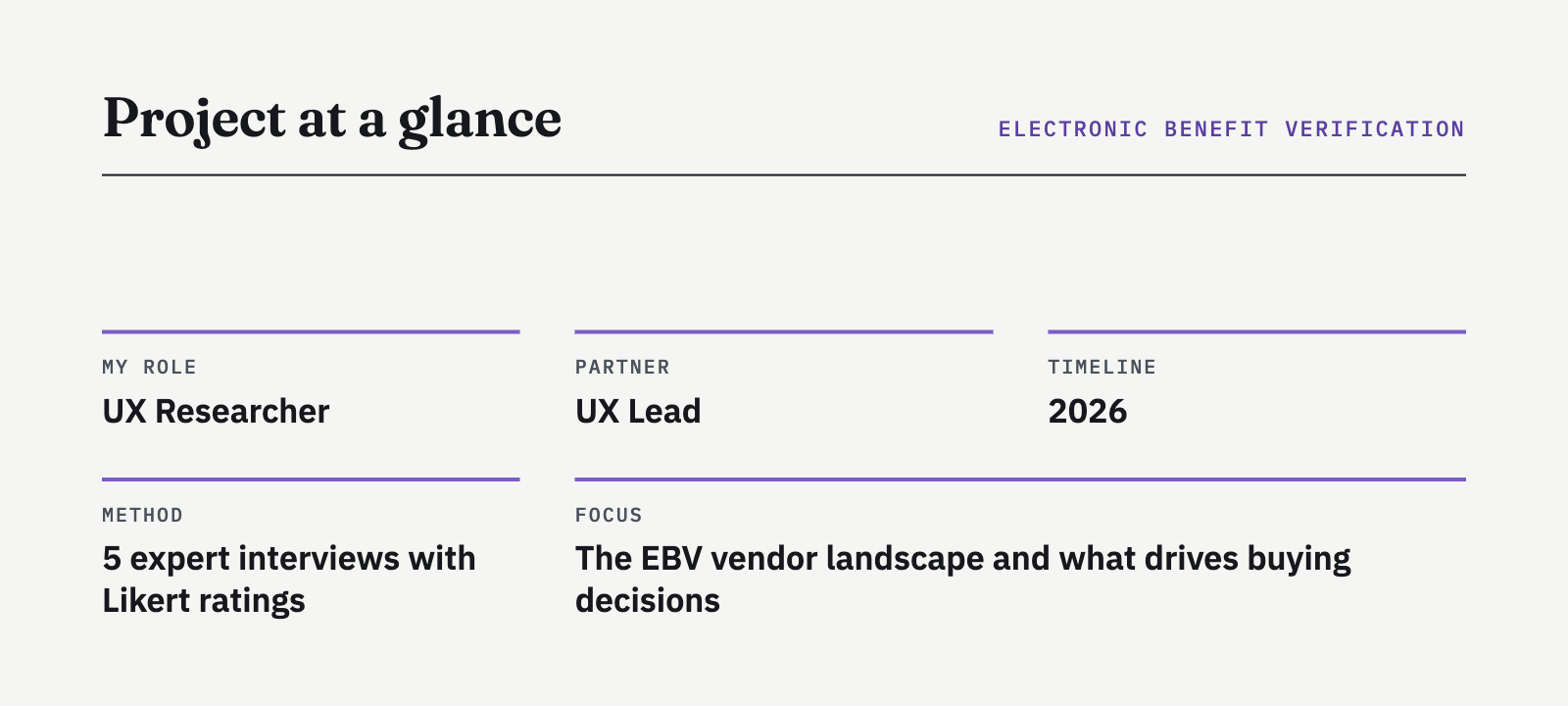
Electronic benefit verification (EBV) checks a patient’s insurance coverage before a therapy starts. It tells pharma manufacturers, patient hubs and providers whether a drug is covered, under which benefit, what the patient will pay, and whether prior authorization is needed. When it works, patients start therapy faster. When it doesn’t, staff are left calling payers to fill in the gaps. I conducted discovery research with five expert buyers of EBV to map the vendor landscape and learn what it would take for a new solution to stand out.
The Problem
Most EBV vendors look alike from the outside. They offer similar core features, and buyers rarely switch once a vendor is in place because implementation is so painful. That makes it hard to win business, and it leaves real gaps unsolved. Medical benefit results are slow and unclear, data is often missing at intake, and incomplete answers still send staff to the phone with payers. To build something worth switching for, the team needed to understand where today’s vendors fall short from the people who buy and use them every day.
The Question: What do experienced buyers and users of EBV need from a solution, and where are today’s vendors falling short?
Research
Research Objectives
Map the EBV vendor landscape and how vendors compare.
Understand how buyers make decisions about EBV products.
Learn what processing needs EBV must meet day to day.
Identify gaps that create an opening to stand out.
Who We Talked To
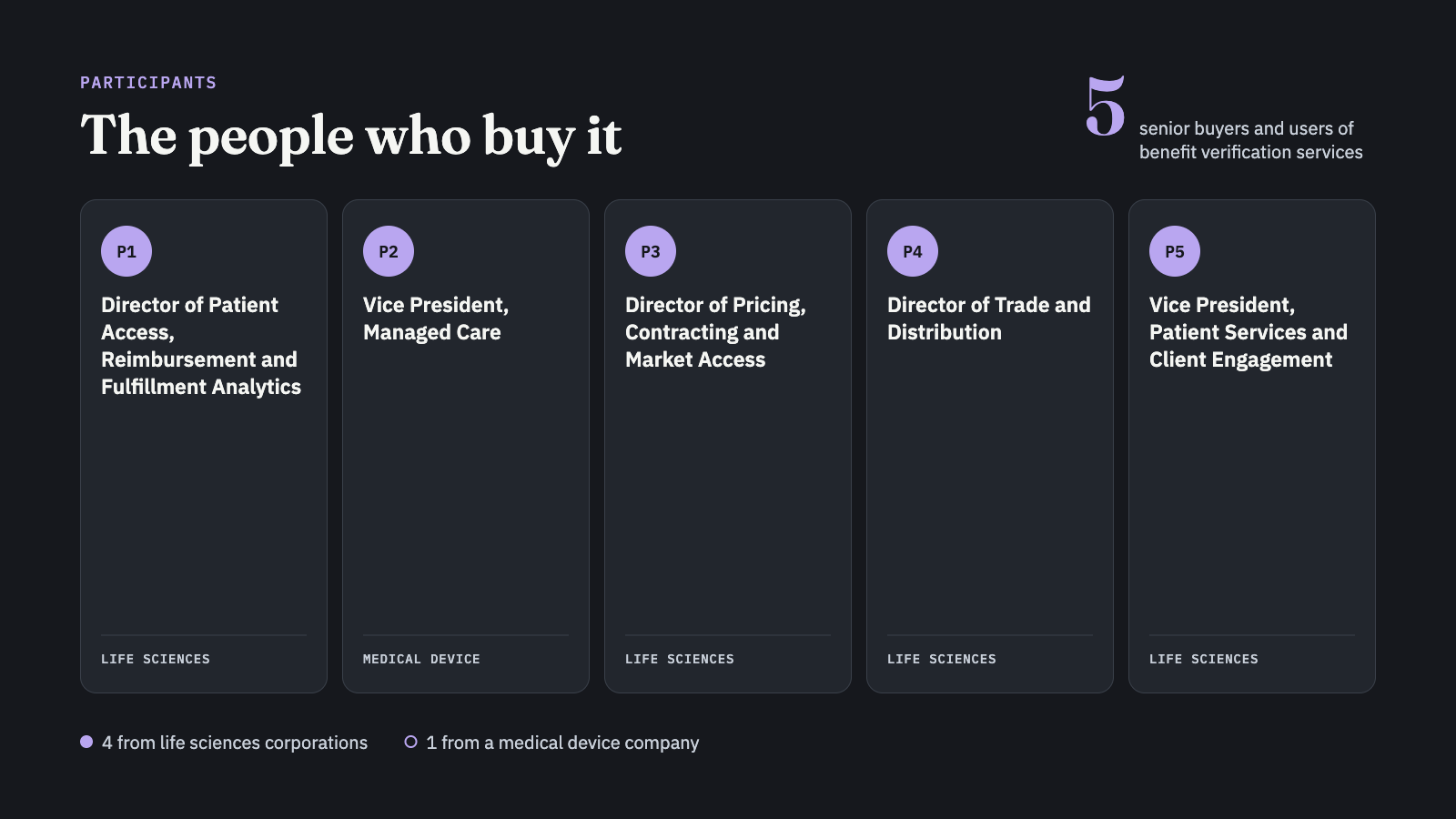
I interviewed five senior leaders in patient access, managed care, market access, trade and patient services. Four came from life sciences corporations and one from a medical device company. Each regularly buys and uses EBV services, so they could speak both to how vendors are chosen and to how the tools hold up day to day.
How They Rated EBV Solutions
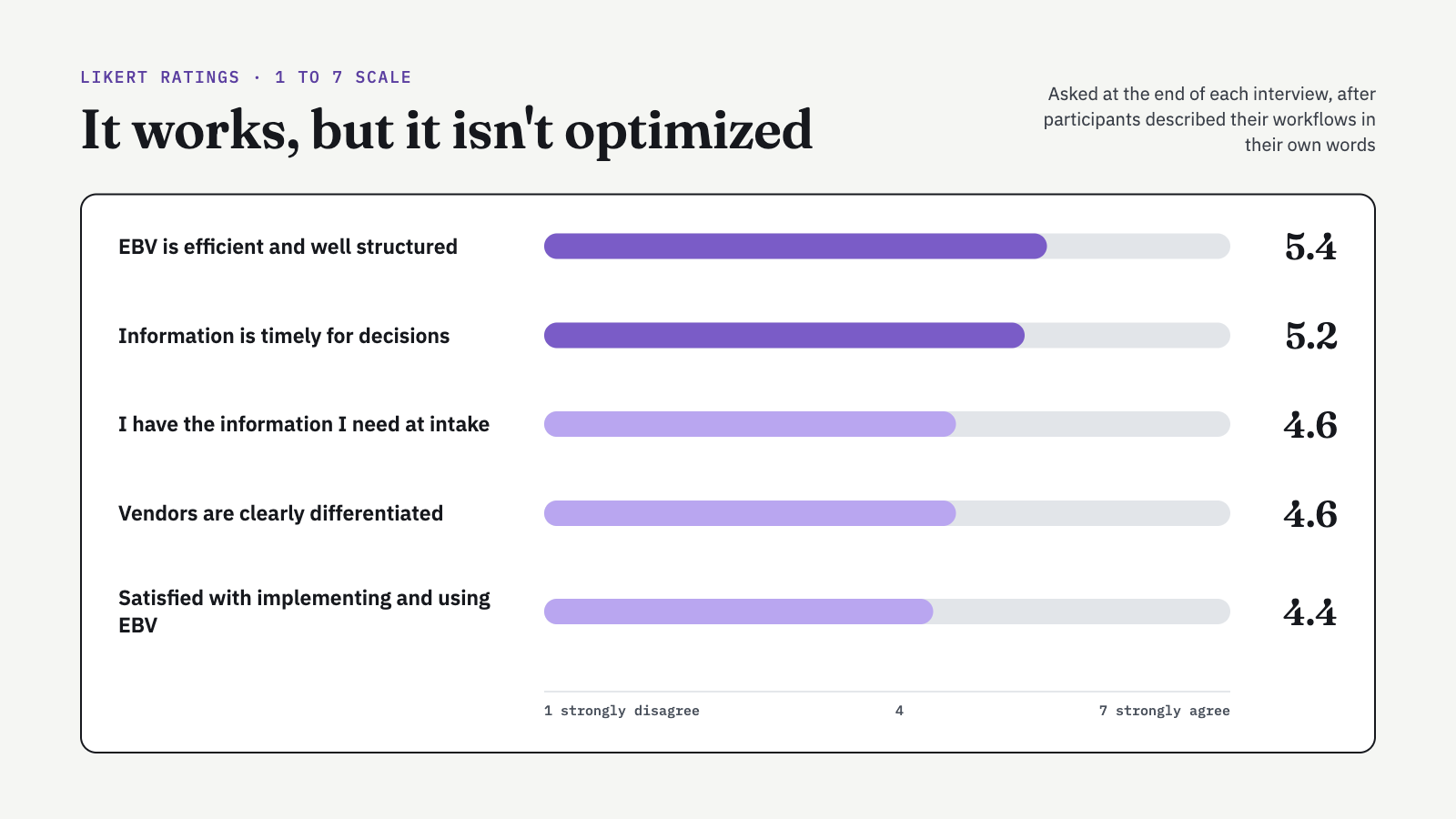
At the end of each interview, after participants had walked through their workflows in their own words, I asked them to rate their experience on a 1 to 7 scale. Efficiency scored highest at 5.4 and timeliness came in at 5.2. Access to information at intake and vendor differentiation both scored 4.6, and overall satisfaction was lowest at 4.4. The pattern was clear: EBV works, but it isn’t optimized.
What We Found
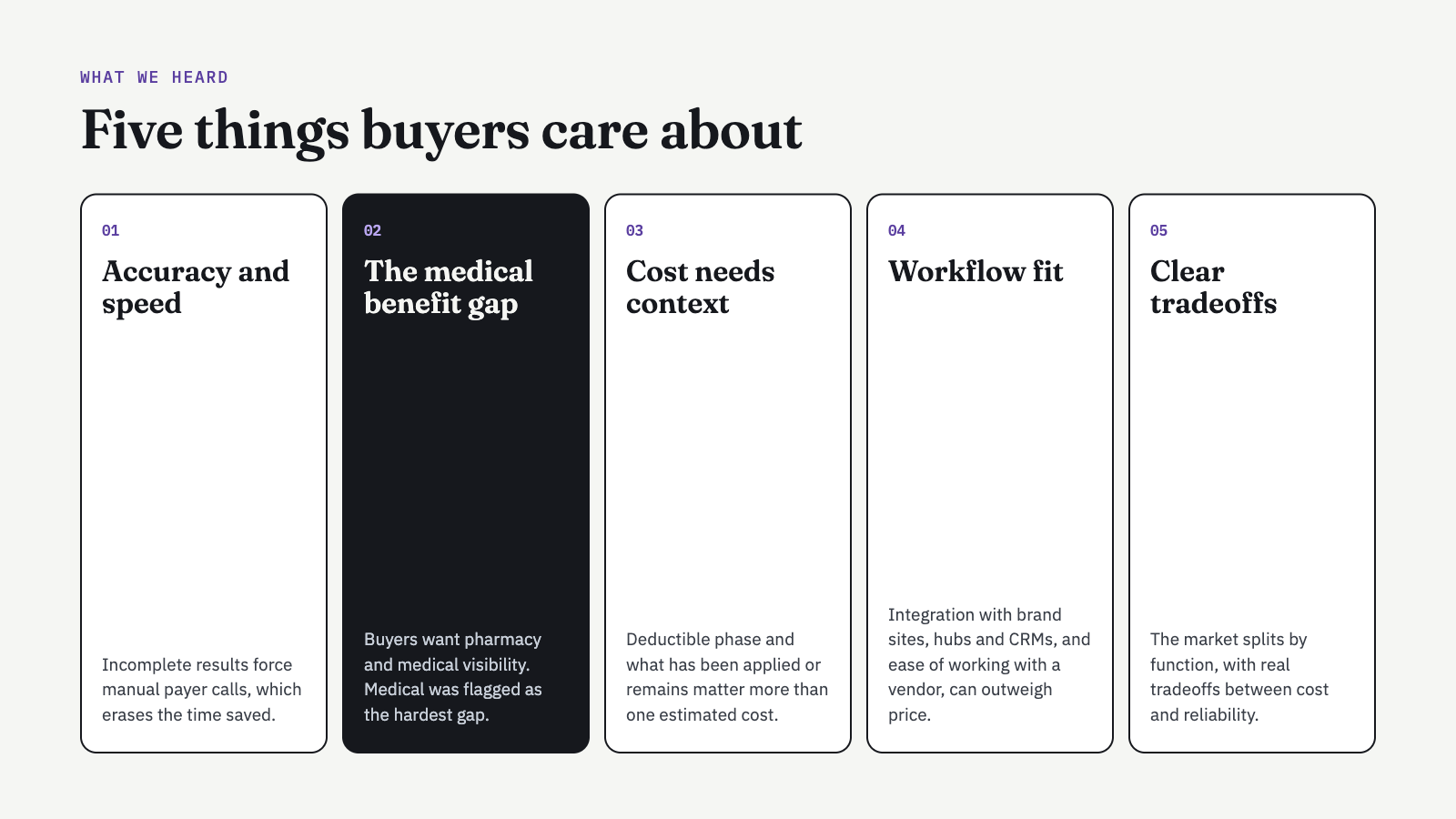
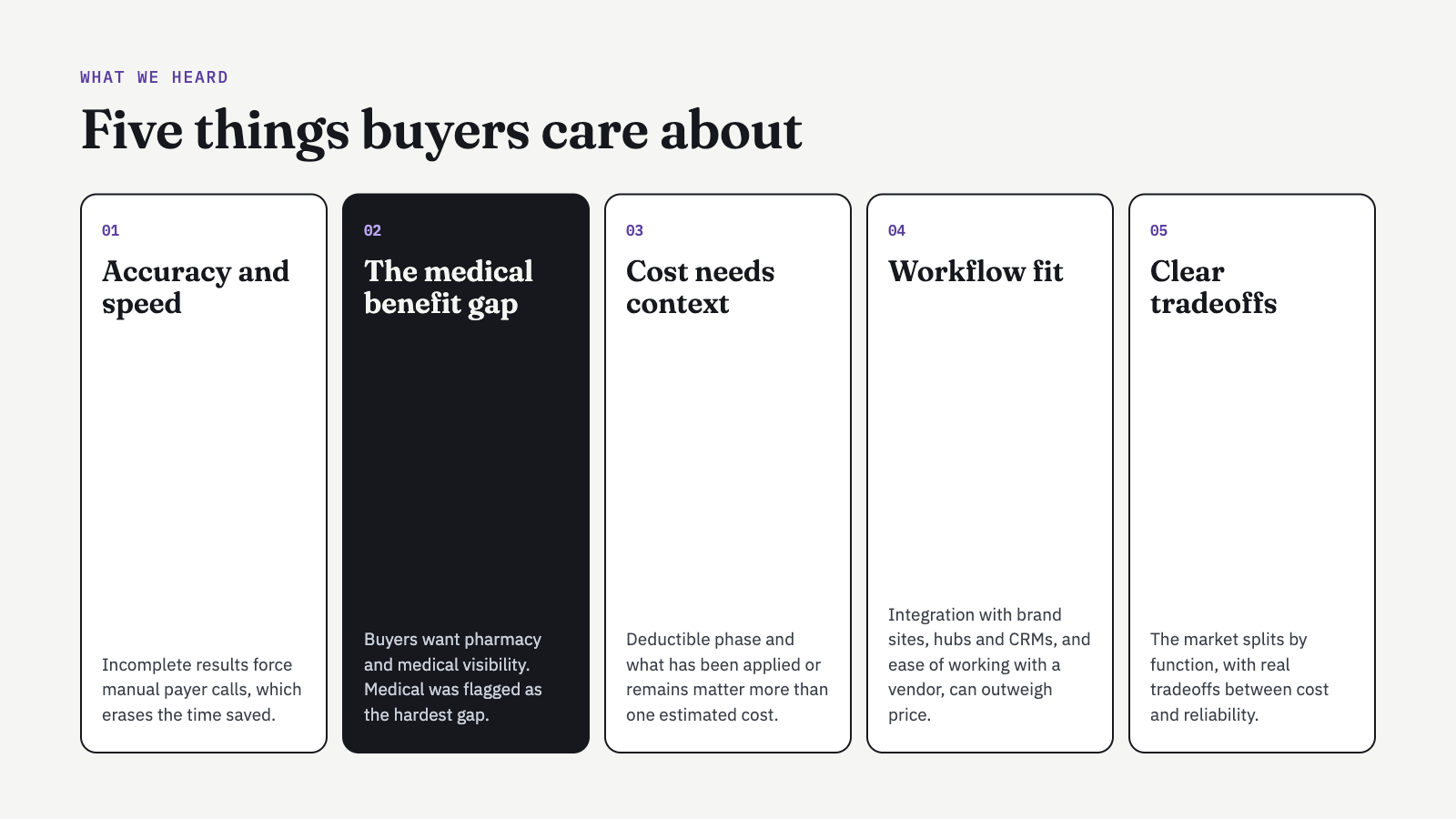
Five themes came up across the interviews:
Accuracy and speed come first. Incomplete results force manual calls to payers, which erases the time saved.
The medical benefit is the blind spot. Pharmacy results come back in seconds. Medical results are slower and harder to interpret.
Cost needs context. Buyers want deductible phase and what has been applied or remains, not just one estimated cost.
Workflow fit can beat price. Integration with brand sites, hubs and CRMs, and how easy a vendor is to work with, often matter more.
Every option is a tradeoff. The market splits by function, and buyers trade cost against reliability.
In Their Words
The Vendor Landscape
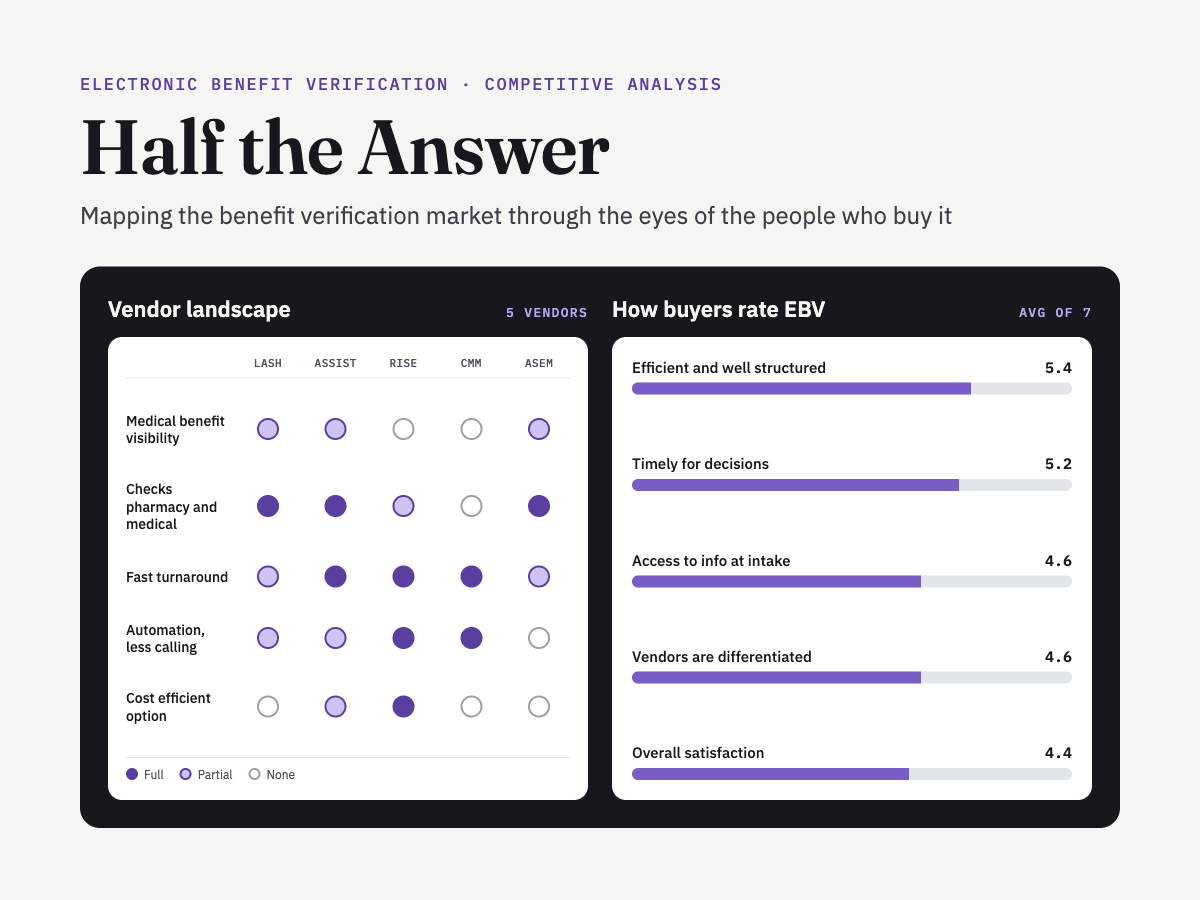
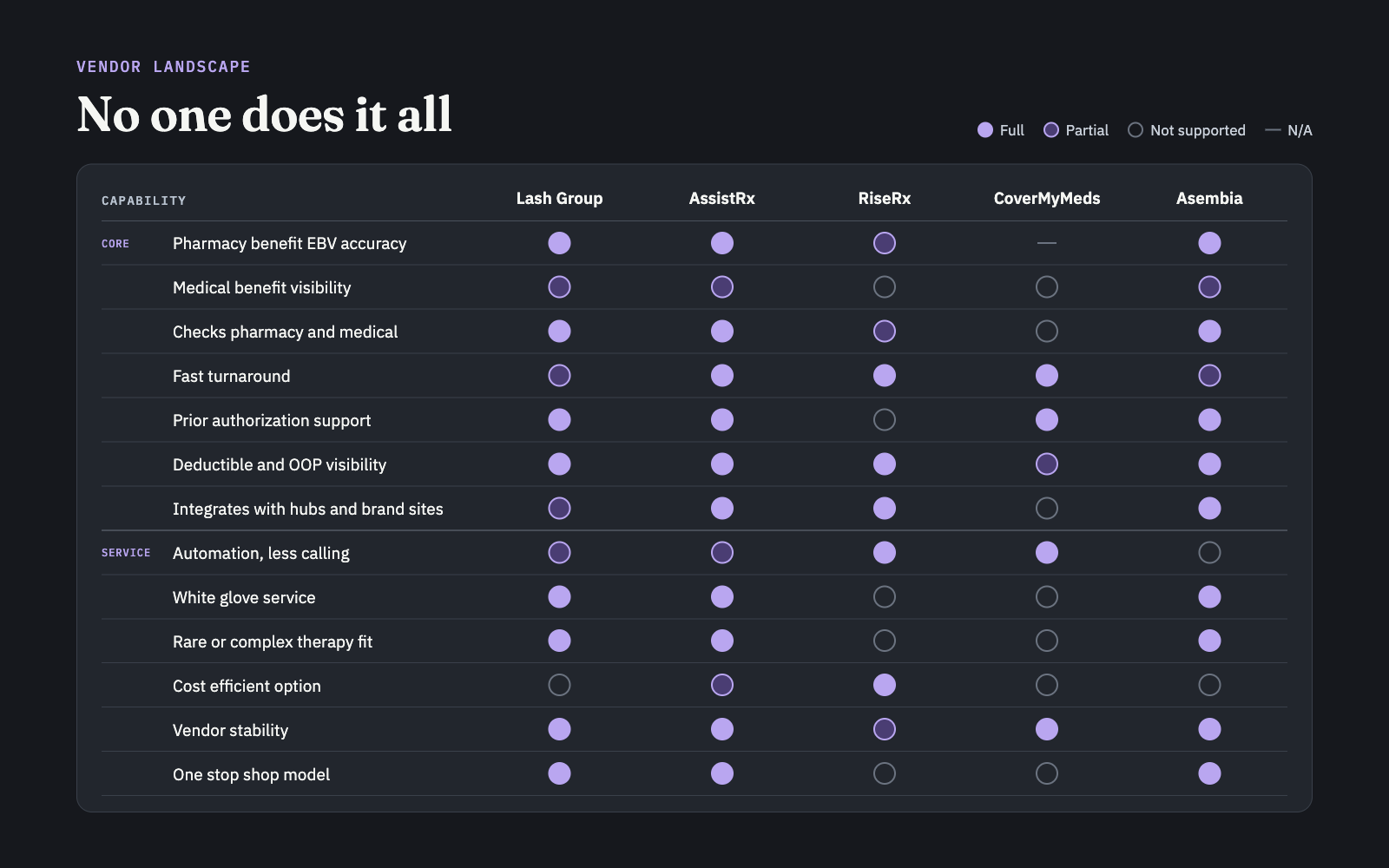
I compared Lash Group, AssistRx, RiseRx, CoverMyMeds and Asembia across 13 capabilities. No vendor does it all. Every one of them offers partial or no medical benefit visibility. Full service hubs bring white-glove support and handle complex therapies but cost more. Leaner tools are faster and cheaper but less complete. Most participants also said the vendors look alike, which leaves room for one that solves the gaps above.
What a Perfect World Looks Like
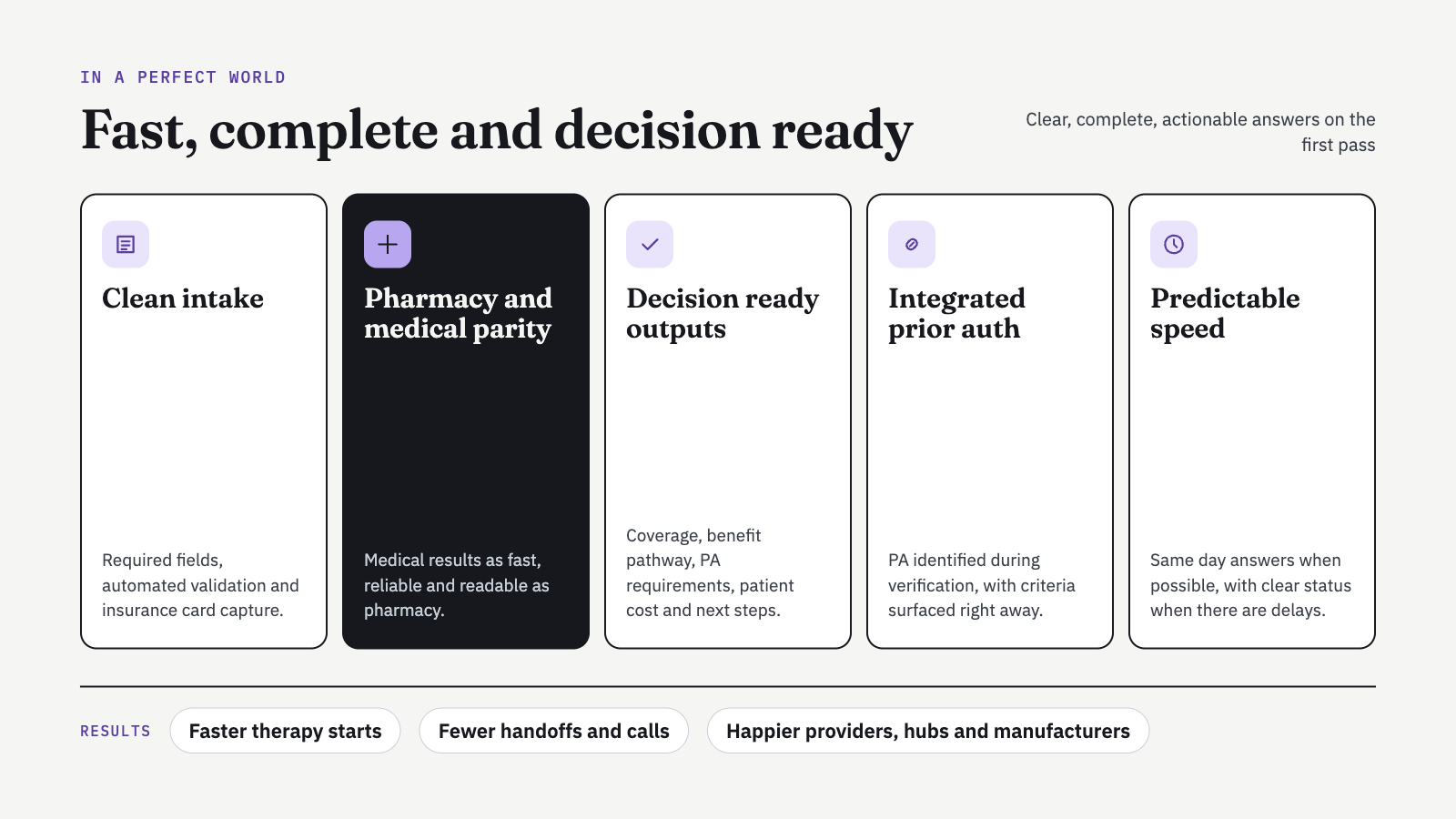
In an ideal state, EBV would deliver clear, complete and actionable answers on the first pass. That means clean intake, medical results on par with pharmacy, decision ready outputs, prior auth flagged during verification, and predictable turnaround. The result would be faster therapy starts, fewer handoffs and calls, and happier providers, hubs and manufacturers.
Opportunities
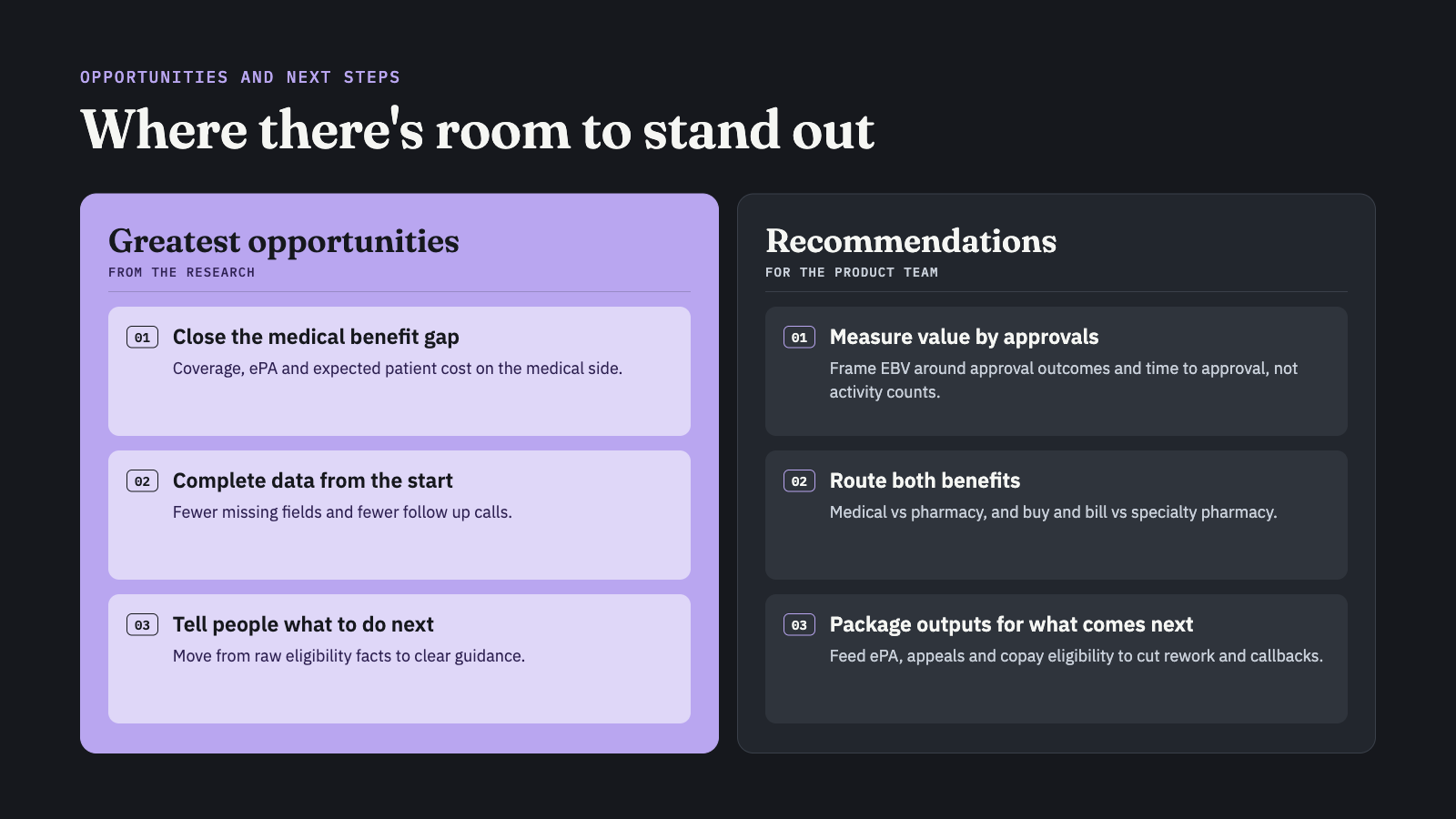
The research pointed to three big openings: closing the medical benefit gap, getting complete data from the start, and telling people what to do next instead of handing them raw eligibility facts. From there, three recommendations were made:
Measure EBV’s value by approvals and time to approval, not activity counts.
Route both medical and pharmacy benefits.
Package results so they feed directly into ePA, appeals and copay eligibility.
Reflection
This study made one thing clear: buyers aren’t unhappy enough to switch for a slightly better version of what they already have. They’d switch for a vendor that solves the medical benefit gap and gives answers people can act on without picking up the phone. The study also had limits. We talked to five senior buyers, mostly from life sciences, and the vendor comparison reflects how they see each vendor rather than hands on testing. The people who run verifications every day weren’t part of this round, and their view would sharpen what to build first.
Outstanding questions
Front line users. How do the hub case managers and benefit verification specialists who run EBV daily experience it, and do their pain points match what buyers described?
Medical benefit data. What would it take, in data and payer connections, to make medical results as fast and reliable as pharmacy?
Switching threshold. How much better would a new solution need to be to outweigh a painful implementation? Which capability would tip the decision?
Who to serve first. Should a new offering go after complex and rare therapies that need white glove service, or high-volume brands that want speed and lower cost?
Proving value. If value is measured by approvals and time to approval, what’s the baseline today, and how would a vendor show improvement?
Validating the landscape. Does the vendor comparison hold up when checked against product demos and a larger group of buyers?

GCI- Yukon TV

BootUp

Code Championship