

Yukon TV
What is Yukon TV?
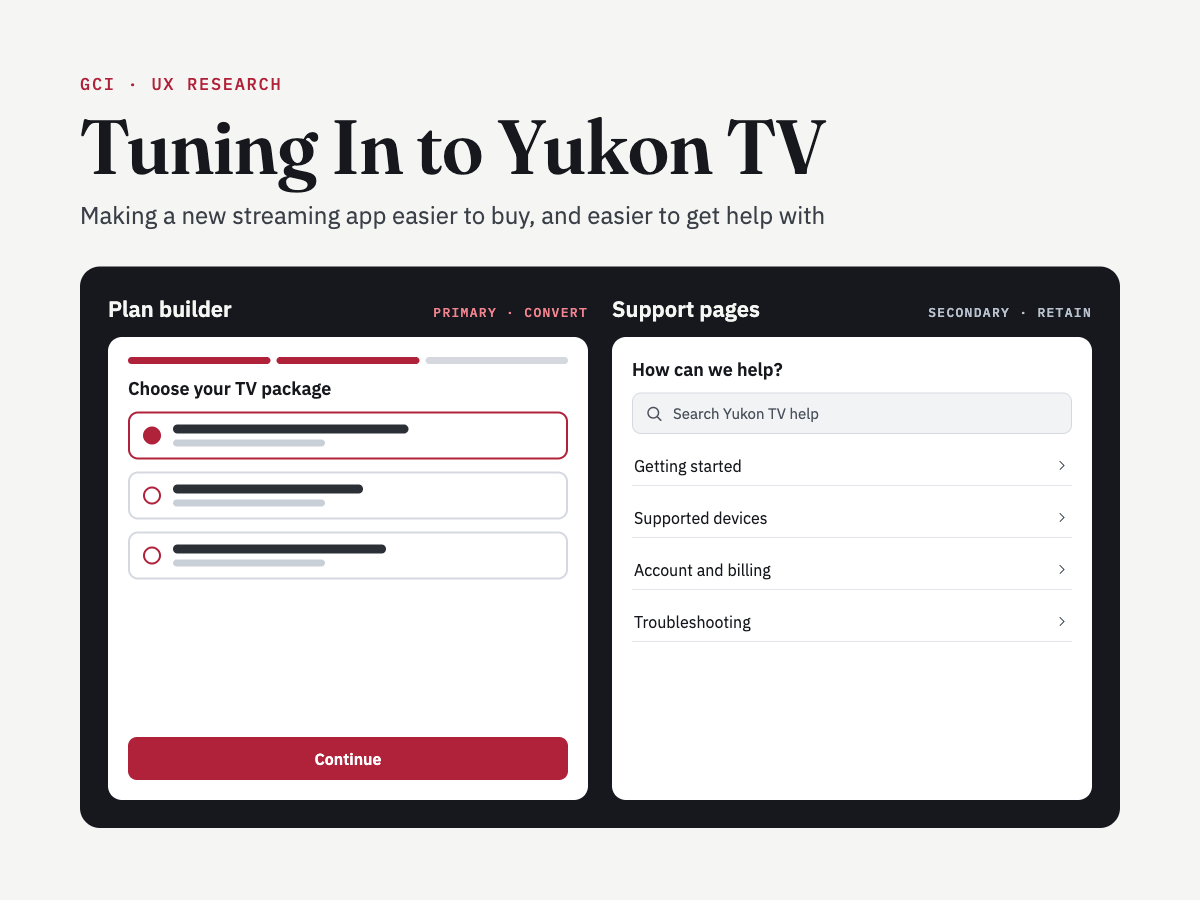
Yukon TV is a state-of-the-art streaming TV app from GCI that lets you watch live and on-demand from your phone, tablet, and a variety of streaming devices. GCI launched it in spring 2022 by moving existing GCI TV customers onto it, and the next priority was to make sure the website showcased it well and helped customers find the appropriate support resources.
The Question?
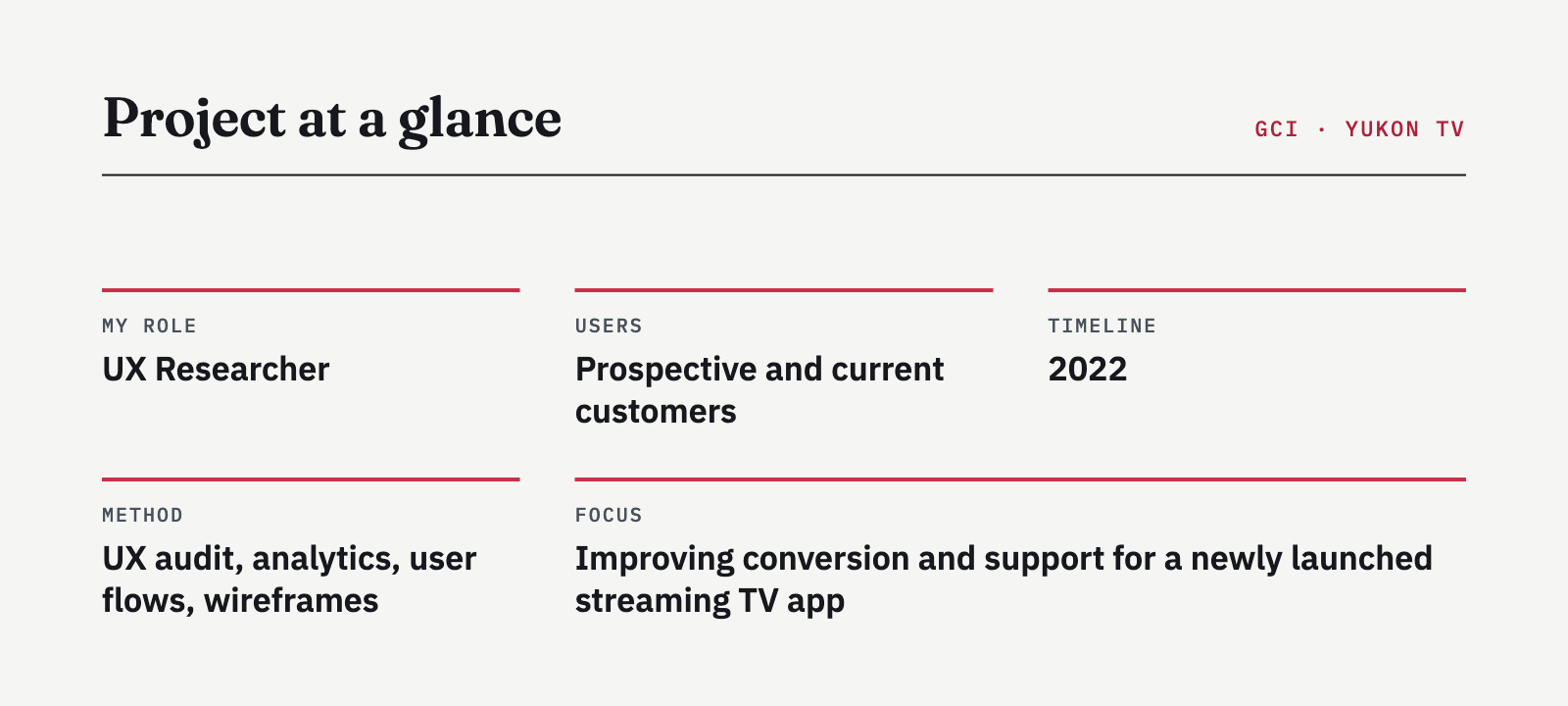
How can we improve the Yukon TV experience for current customers seeking support and for prospective customers, while increasing overall conversion?
Research
User flows
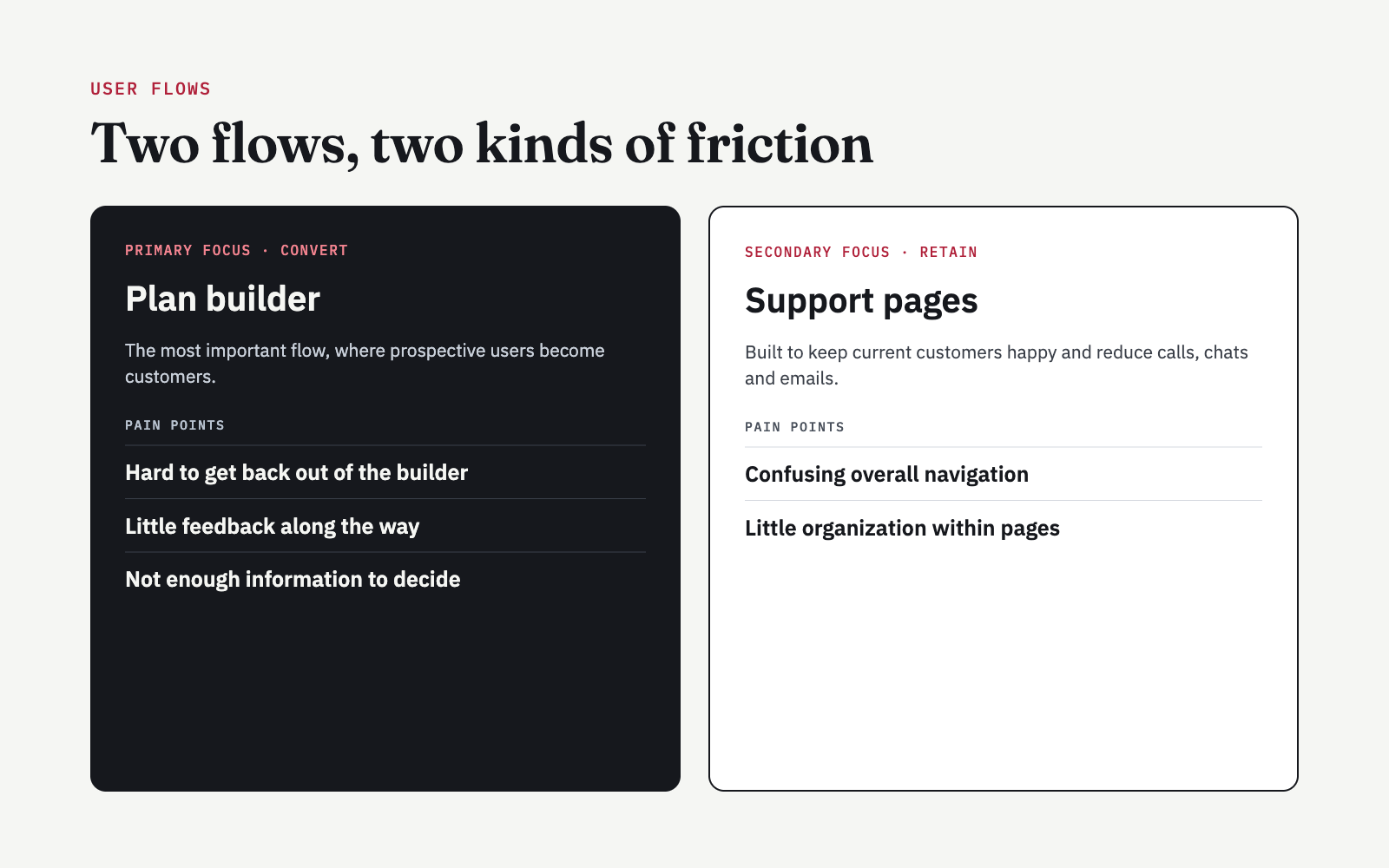
To start, I focused on the two flows that mattered most. The plan builder is where prospects become customers, and people had trouble getting back out of it, got little feedback along the way, and didn’t have enough information to decide. The support pages exist to cut down on calls, chats and emails, but navigation was confusing and the pages lacked organization.


Primary Focus: Plan Builder
The plan builder was selected as the most important user flow as it focused on converting prospective users into customers. A few painpoints in this flow included: Navigating out of the plan builder, a lack of feedback, and a lack of information.

New Customer: Plan Builder User
Secondary Focus: Support Pages
The Support pages are built to help retain current customers and help alleviate customer service calls, chats, and emails. A few pain points in this flow included: the overall navigation and a lack of organization within the pages.

Yukon Support Flow
Audit and analytics
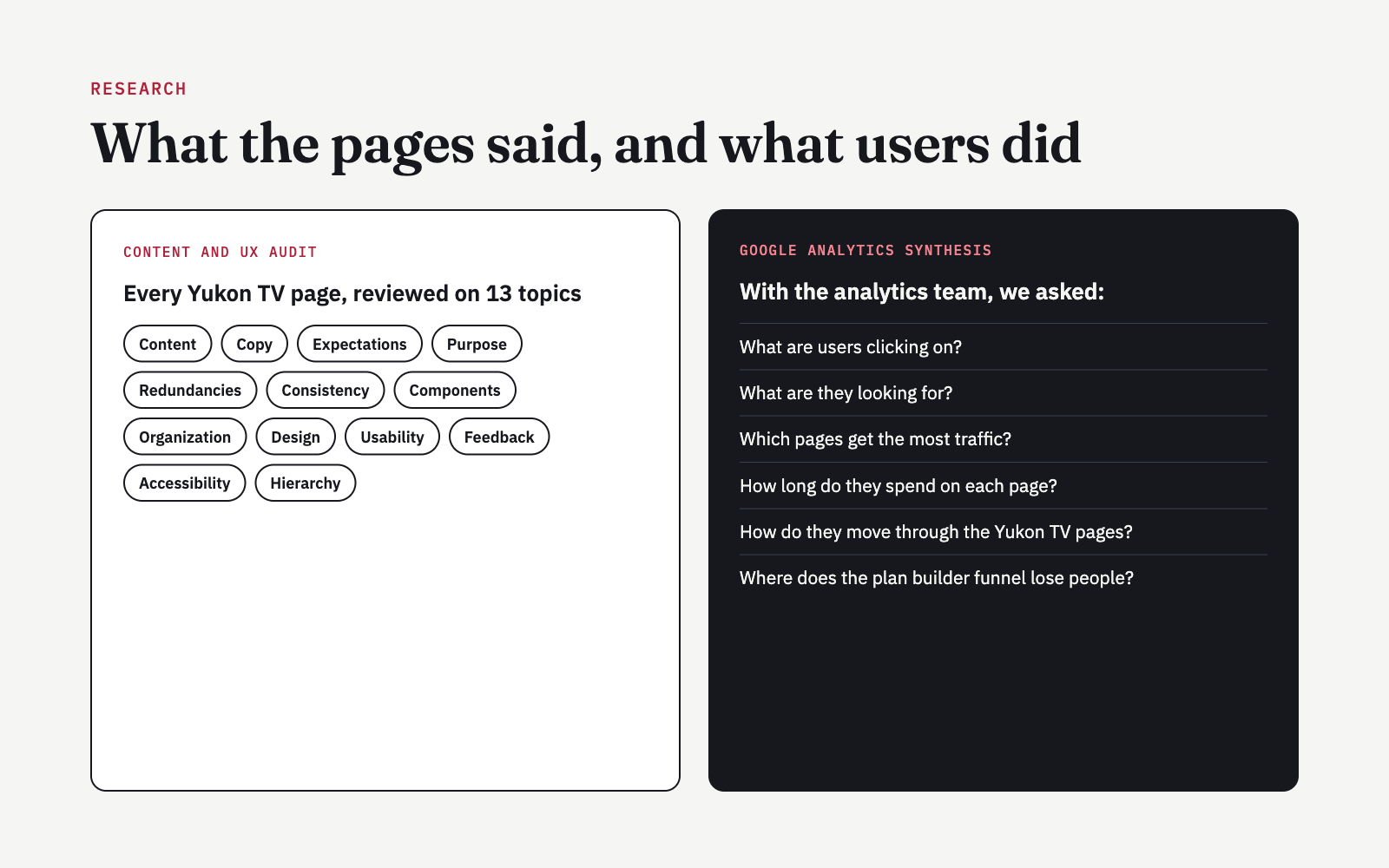
I reviewed every Yukon TV page across 13 topics, from copy and hierarchy to accessibility and consistency. With the analytics team, I looked at what people clicked, which pages got the most traffic, how long they stayed, and where the plan builder lost them.

Support Page Content Comparision
Google Analytics Synthesis
Finally, we collaborated with our analytics team to pull out some key information from Google Analytics to help understand what users were clicking on, what they were looking for, what pages were the most trafficked, how much time they spent on each page, and how they navigated the Yukon TV ecosystem. We also analyzed the plan builder individually to understand how the funneling and conversion process could be improved.
The Journey Takes Shape
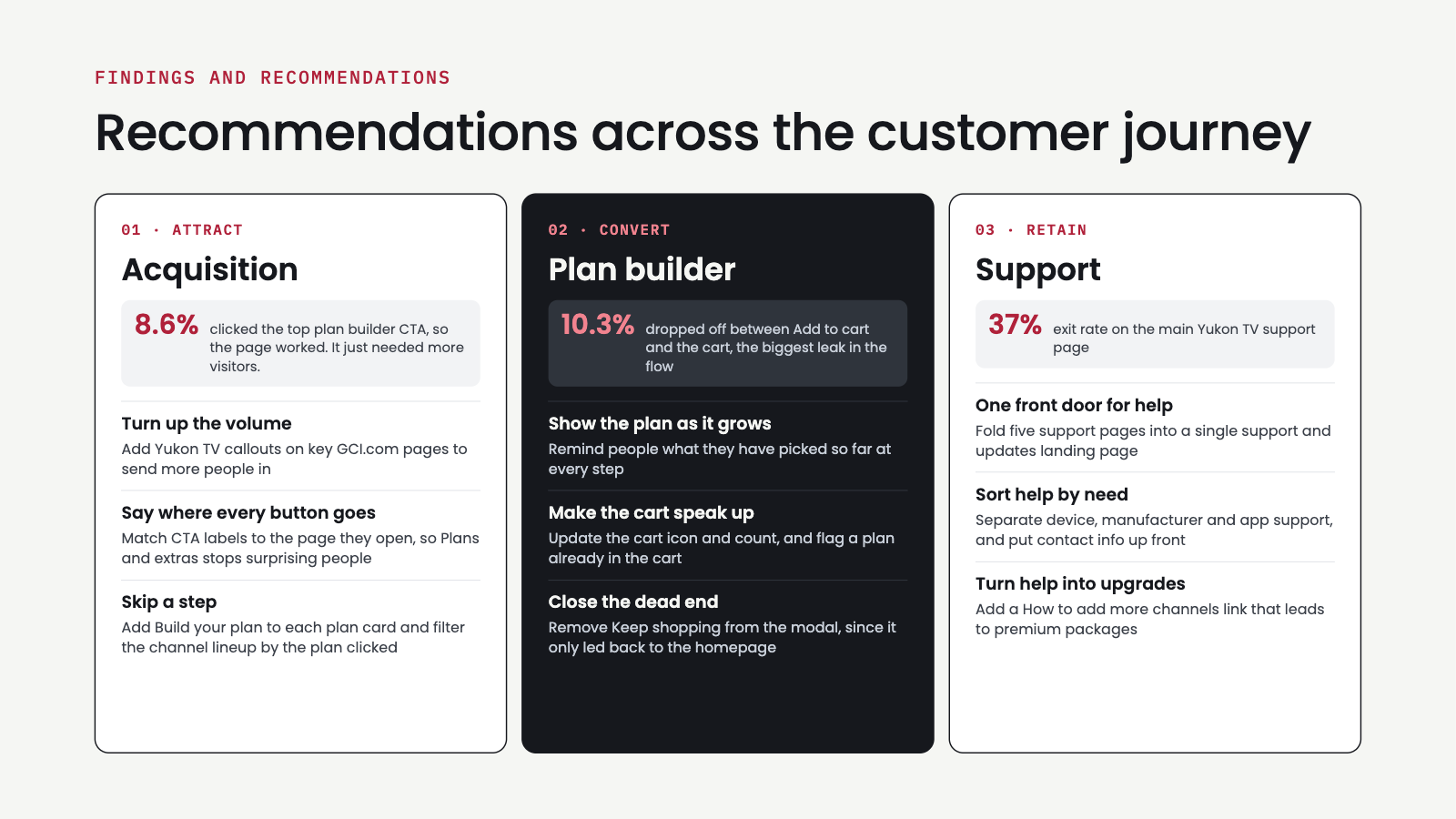
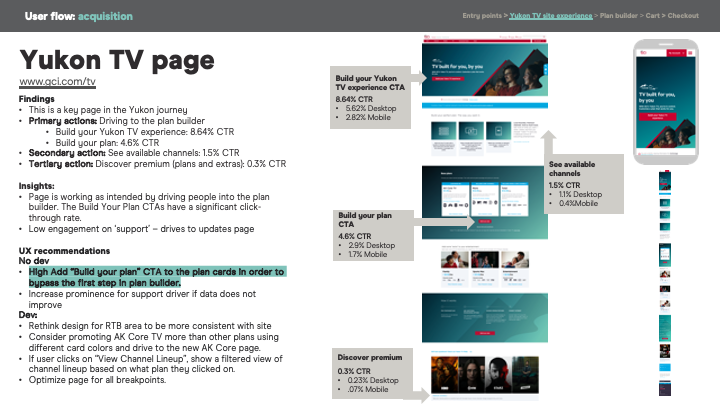
Once we knew where people got stuck, the recommendations fell into three stages. To attract, the Yukon TV page was already doing its job, with 8.6% clicking into the plan builder, so the focus was on sending more traffic and making every button say where it goes. To convert, the plan builder itself worked well, but the biggest leak came after Add to cart, where 10% of people dropped off, so we recommended showing the plan as it grows and making the cart speak up. To retain, we proposed folding five support pages into one front door for help, sorted by need.
Recommendations
Findings and Recommendations Report
I combined the audit and analytics into a findings and recommendations report. Most recommendations focused on three stages of the customer journey: acquisition, the plan builder and support.

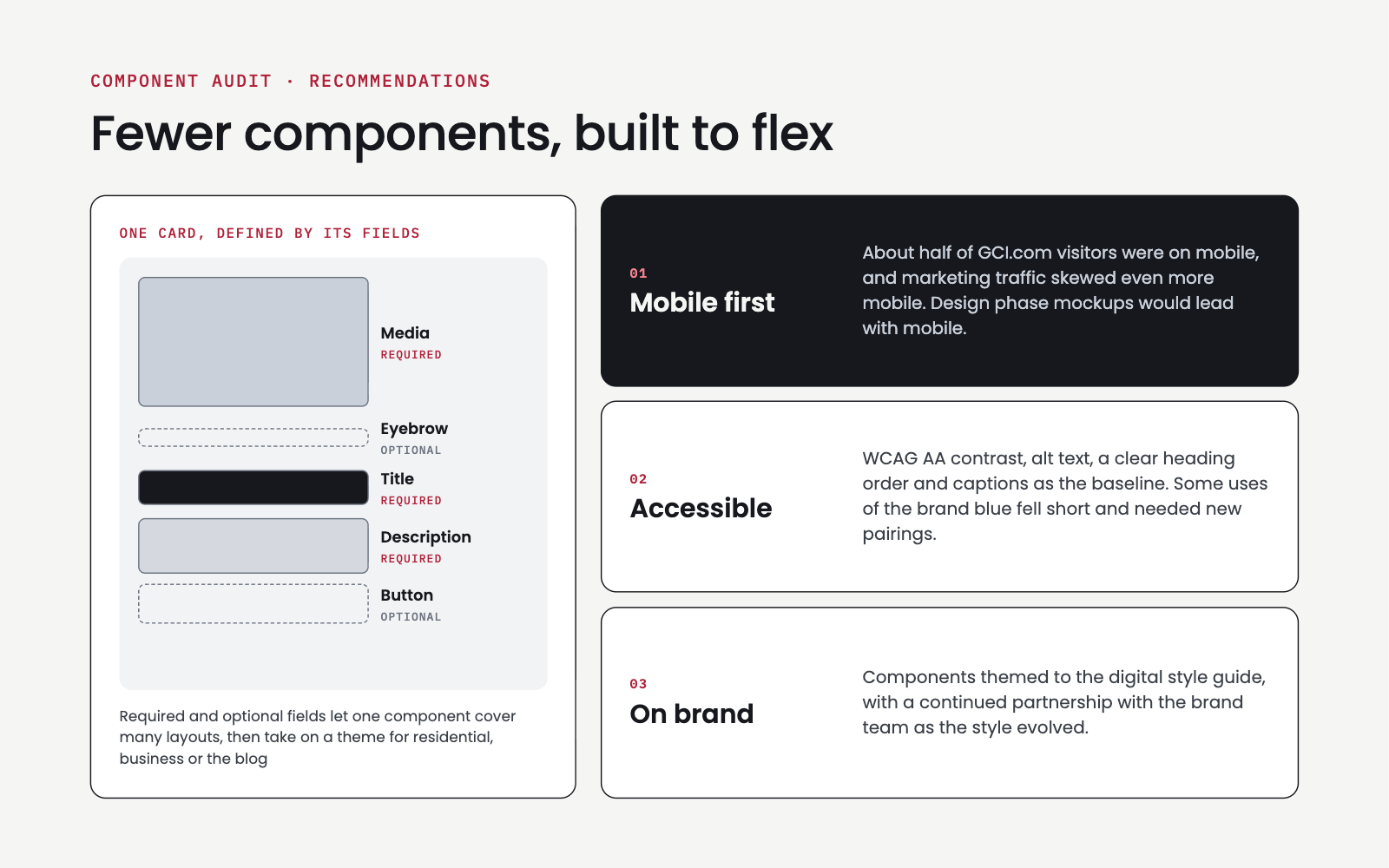
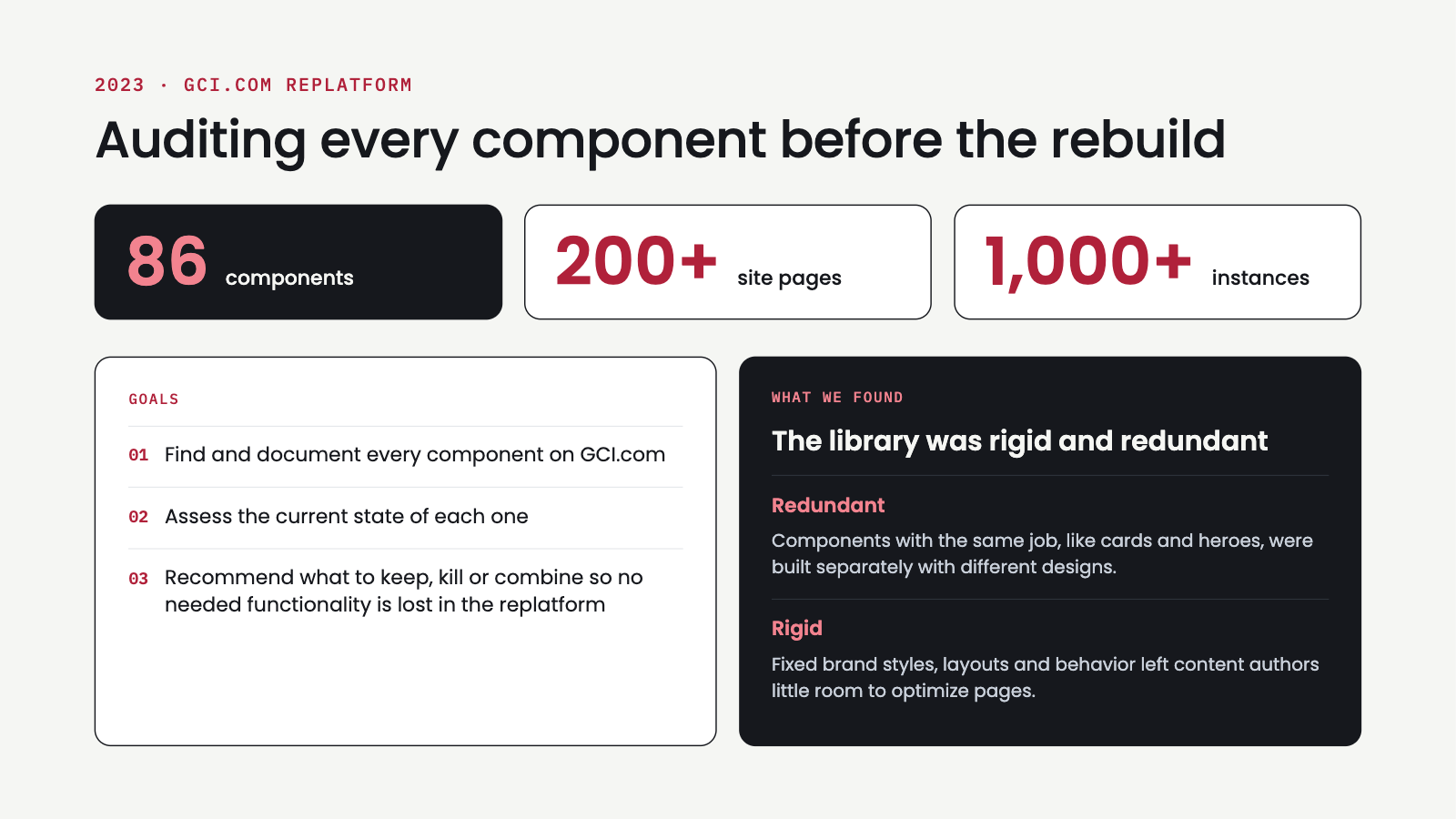
I recommended a smaller library built to flex. Each component would be defined by required and optional fields, so one card could cover many layouts and take on a theme for residential, business or the blog. Three principles guided the approach: mobile first, since about half of visitors were on mobile; accessible, with WCAG AA as the baseline; and on brand, in step with GCI’s digital style guide.
Design
Page Description Diagrams
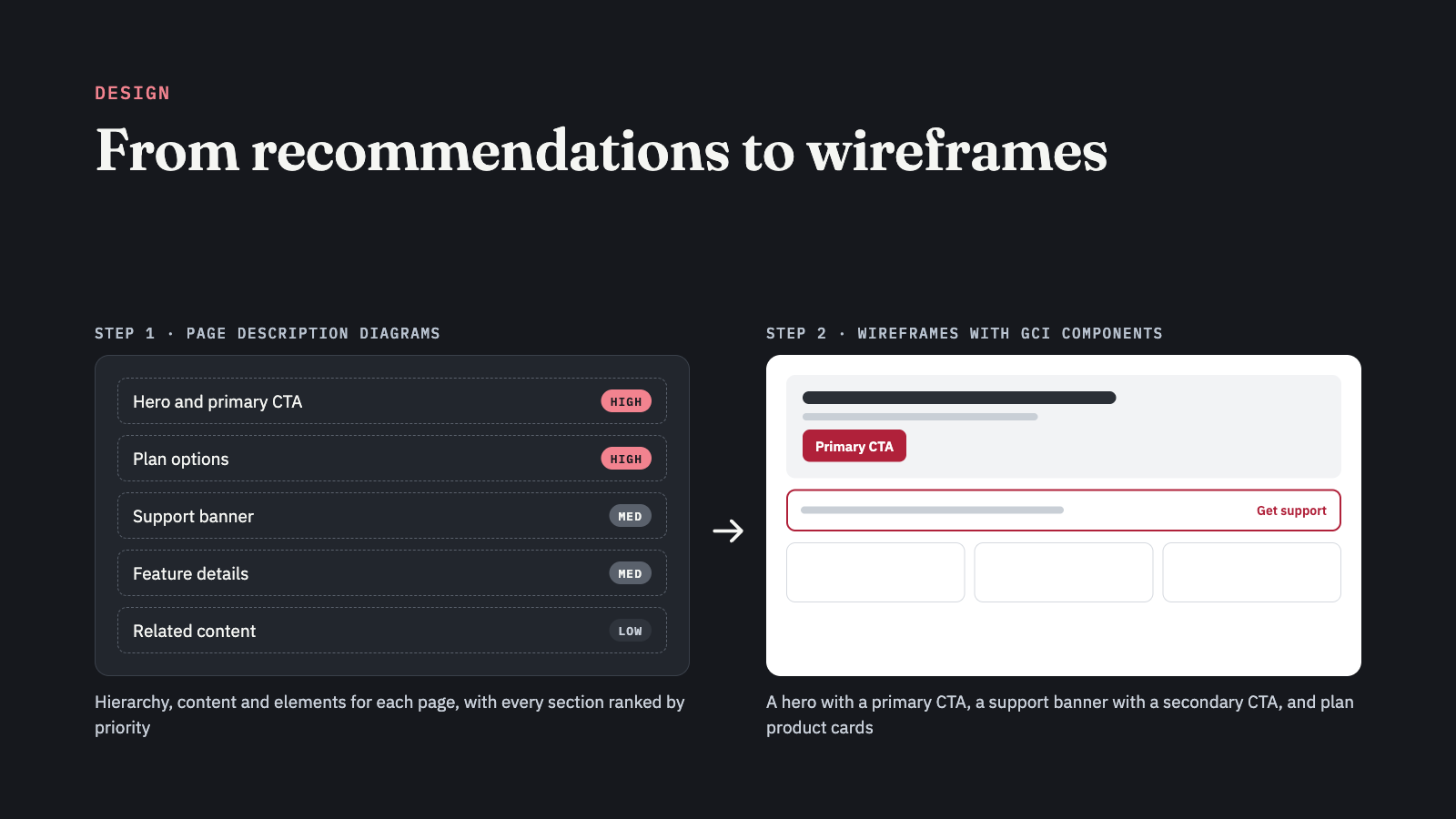
Based on the recommendations and client feedback, I created page description diagrams outlining each page’s hierarchy, content and elements, and ranked every section as low, medium or high priority. I then built wireframes from GCI’s branded components, tailoring each page to its audience. Key components included a hero with a primary call to action, a promotional banner with a secondary call to action for support, and plan product cards.
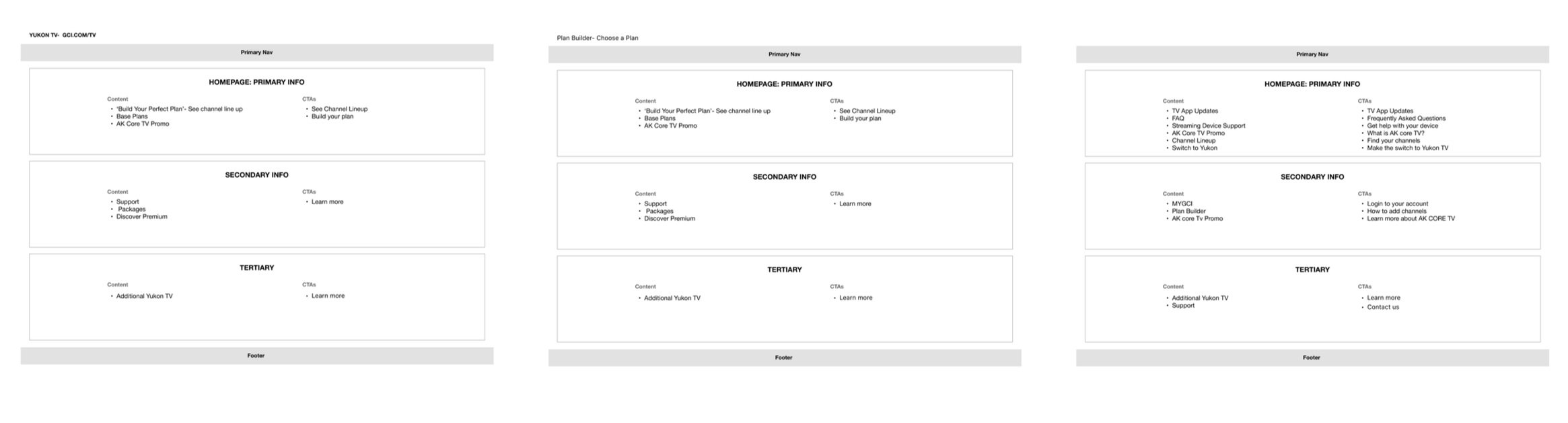
Sample PDD’s
Wireframes


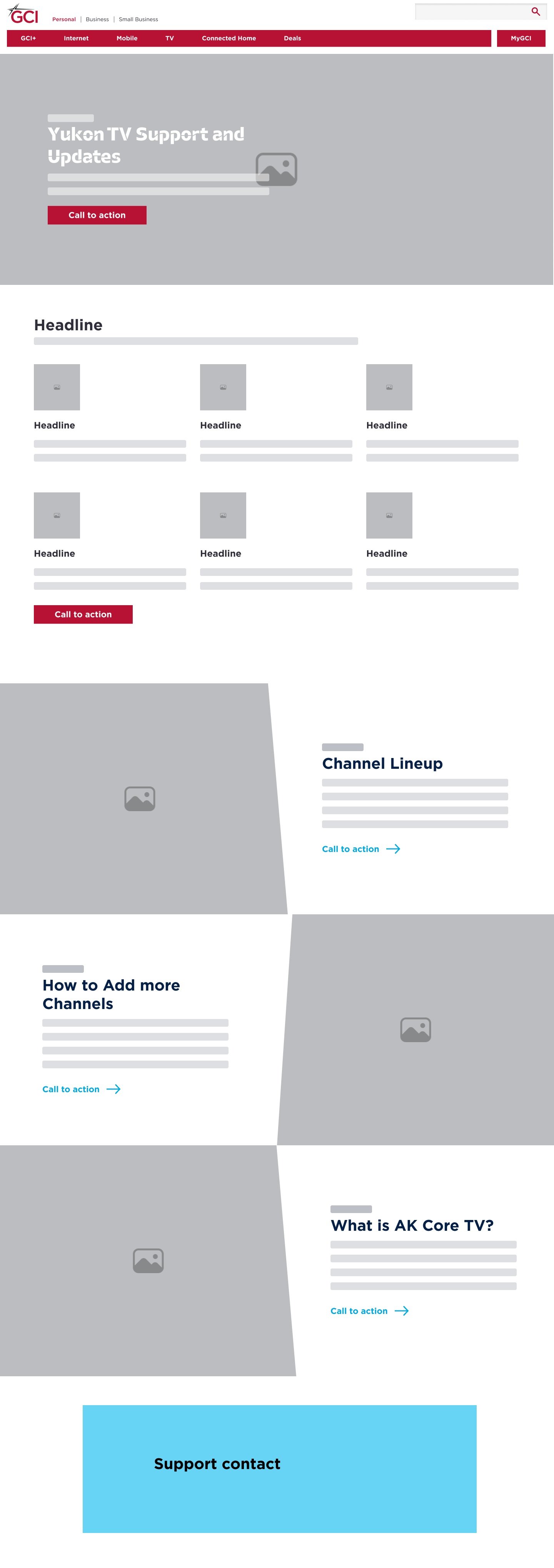
Deliverables:

BootUp

Gillette Children's Hospital- Usability Review

Code Championship